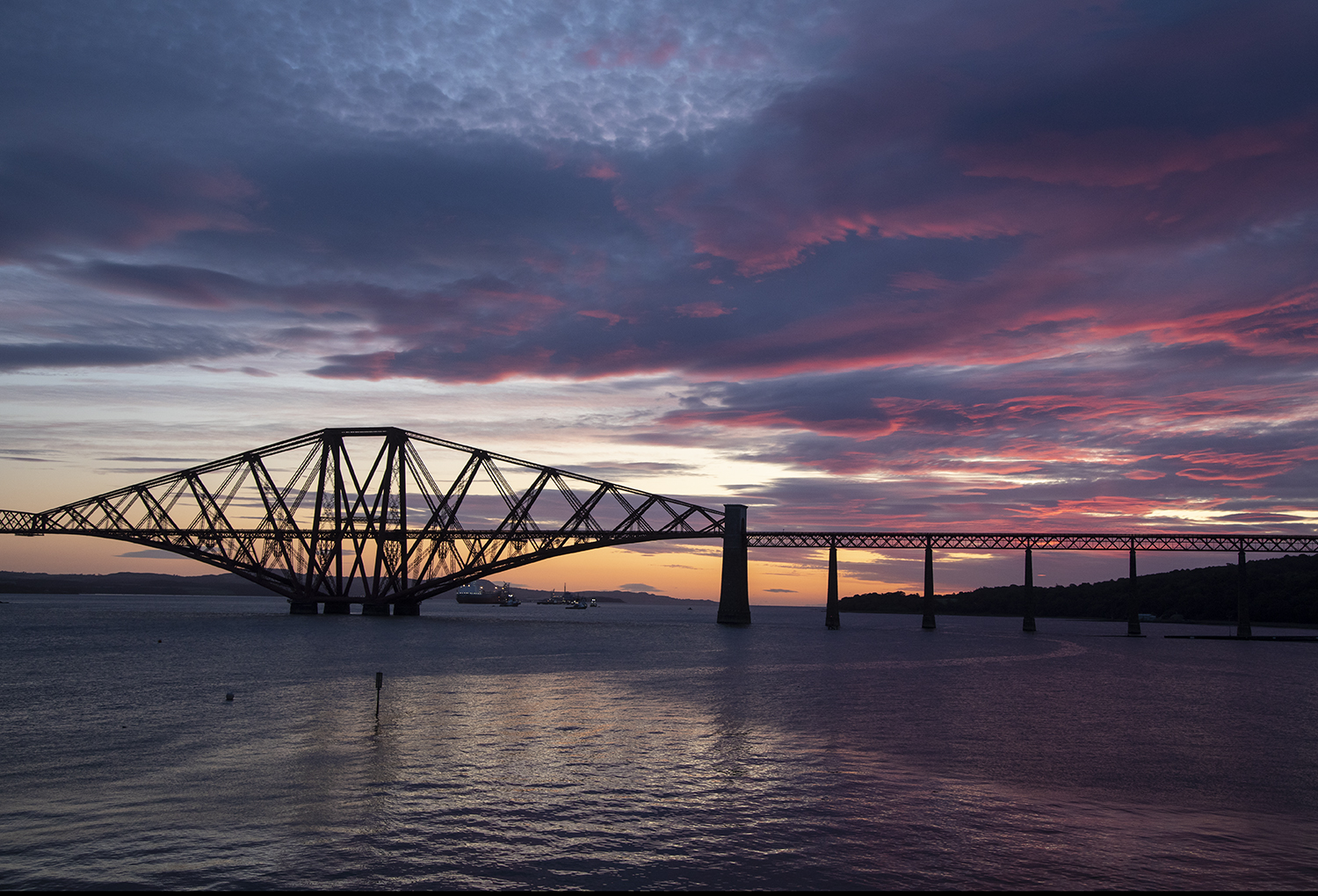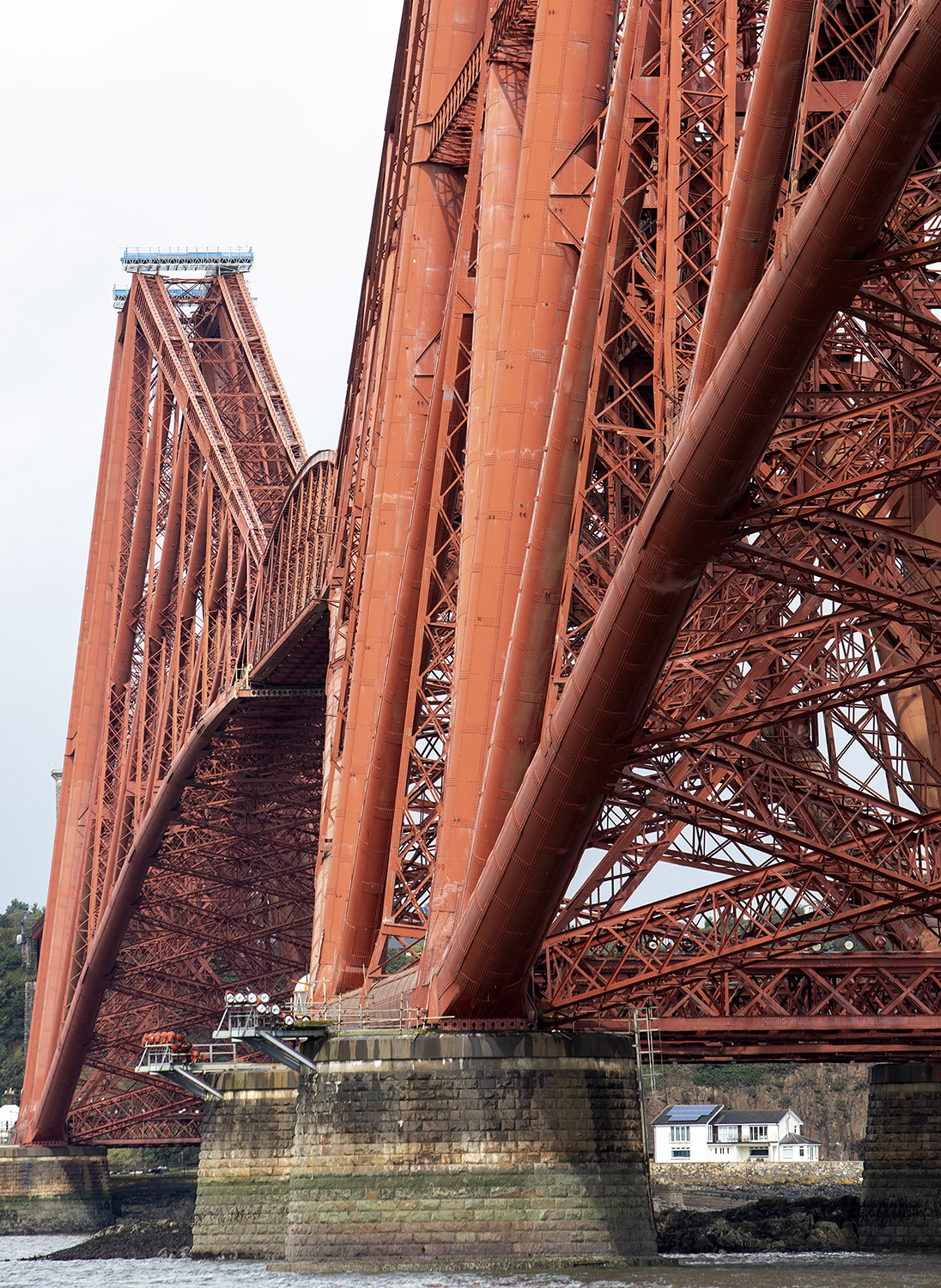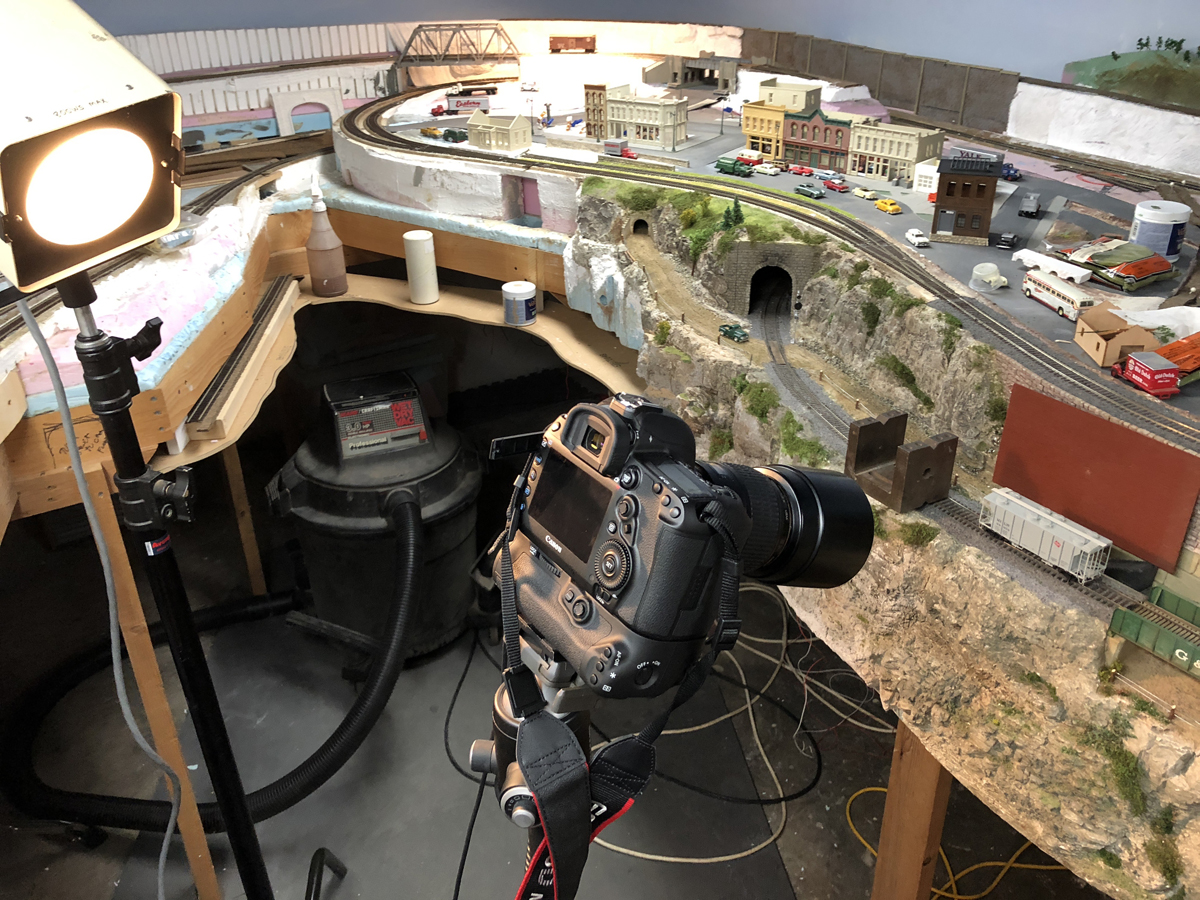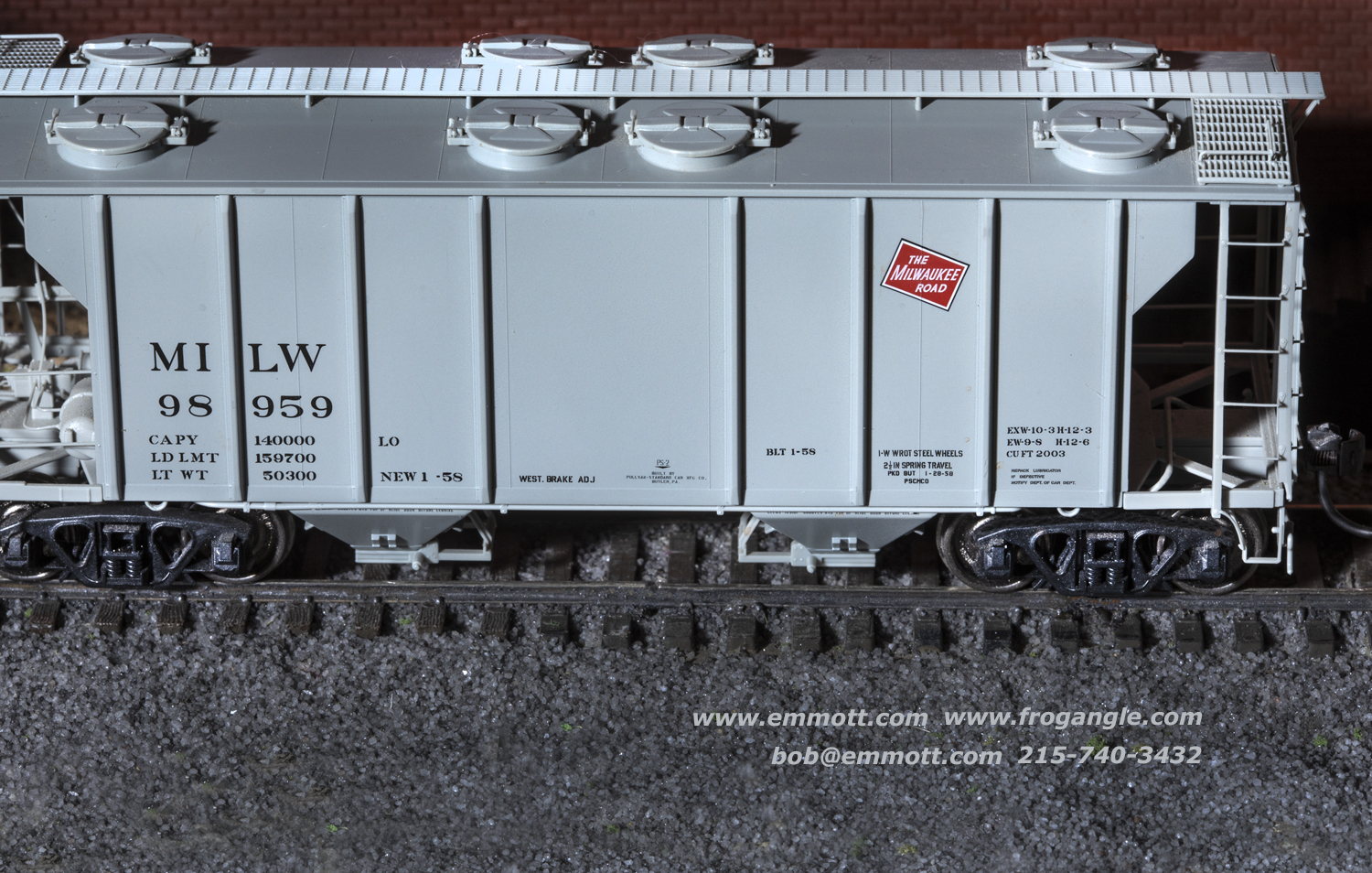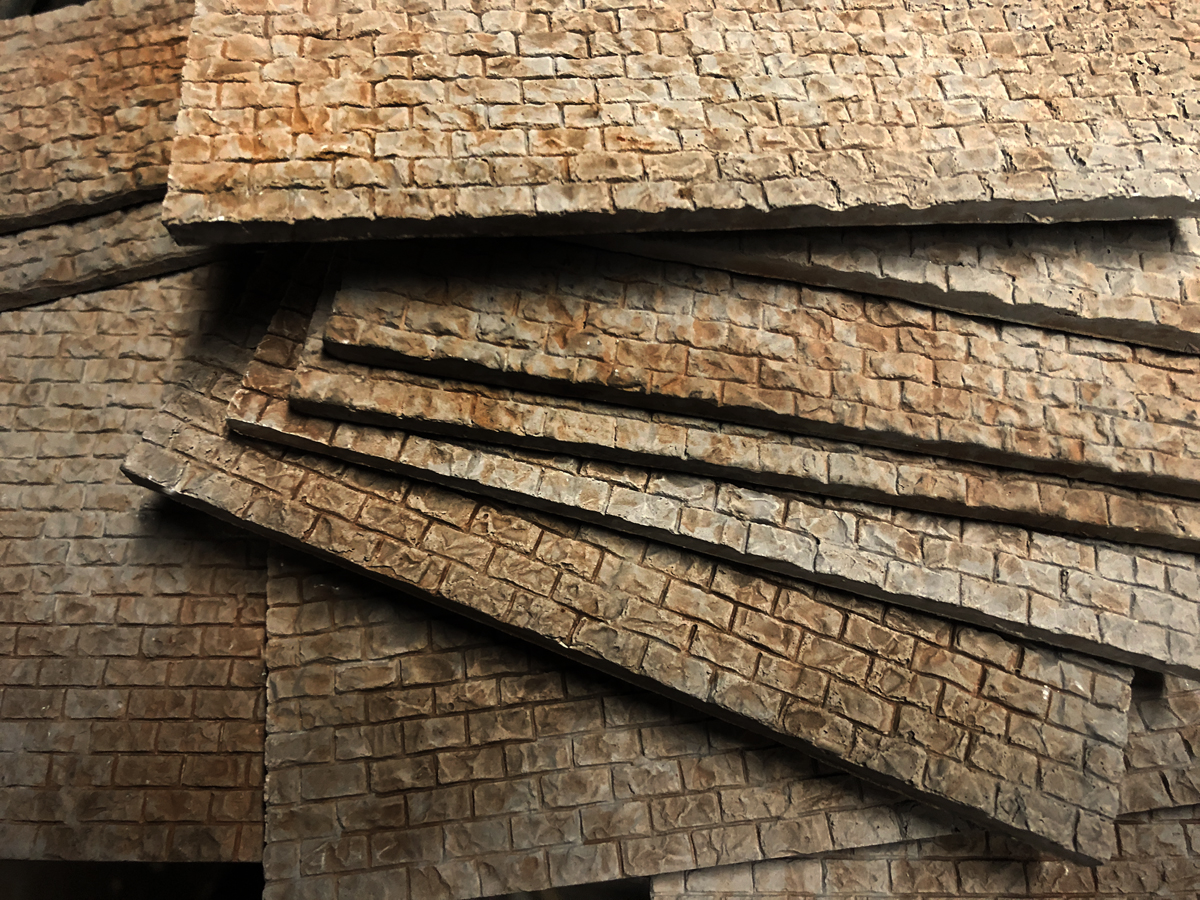
Shown here is a test casting, in Hydrocal, of a section of the concrete arch bridge. I wanted to test how the plaster would exit the mold. It was difficult, even in this small section, and even though I had built the mold with a 3 degree taper for the pieces forming the small enclosed arches. The outside pieces of the mold all are removable and that was fine, so I decided to make each of the individual small arch pieces separately removable, so one by one they can be eased out of the whole piece. Hopefully I will have a photo of a completed full casting sometime in the near future. I was pleased by the look of the piece and anxious to see a whole side intact!
A Test Casting
Bridge Building
Designing my layout, I wanted to incorporate different types of bridges (I suppose that’s a thought of many model railroaders), but I wanted to design some of my own bridges in a freelanced but believable way. There are a number of concrete arch bridges in my area of NW Philadelphia including the Walnut Lane Bridge and the Henry Avenue Bridge, both Highway spans but seemingly constructed very similar to many railroad bridges of the same type. I also referred to the terrific book “Bridge and Trestle Handbook” by Paul Mallery to keep me building a basically sound engineered structure.
The Drawing shows my design for a concrete arch bridge to span a gorge that will be right in the front of my layout.
The photo shows the form I built to cast the bridge (actually half the bridge) as two castings back to back will form the bridge.
The form is made from Wood and sintra.
Bricks
Some thoughts on plastic model brick painting.
Working on some DPM kits I decided to dry brush brick faces after base painting the whole structure with a mortar color.
I think this does work pretty well but is very time consuming, if you are being careful not to get too much paint on the brush, so it does not run down into the mortar. I want to try some other methods including the Roberts Mortar, and see if it works as well and is quicker.
There also was an article in RMC or Model Railroader about washes of color for stone and brick, a short time ago that seemed really good, but I can’t seem to find it. Anybody remember an issue about this?
Train Shows
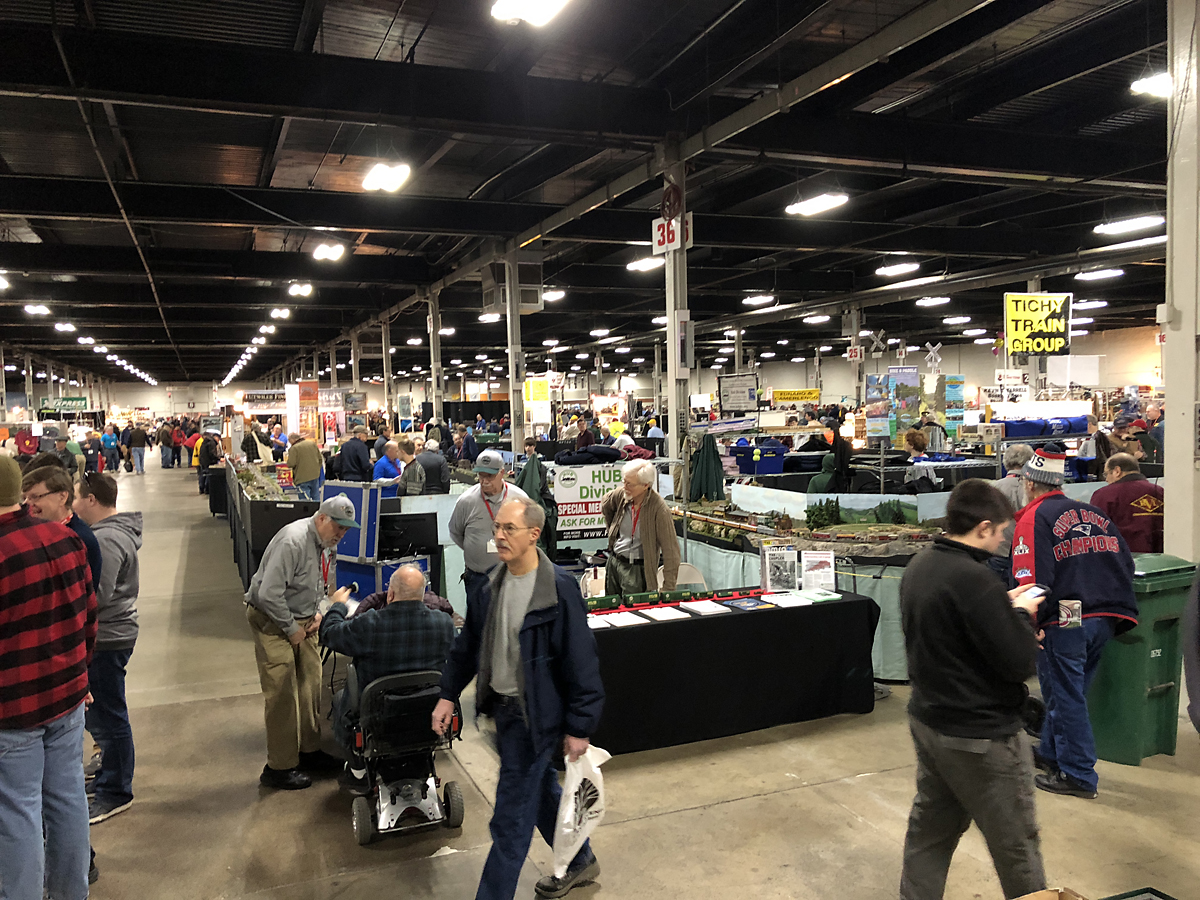
About to attend the Philadelphia Greenbergs train and toy show December 11 and 12. Has Been a while since I have gone to a Greenbergs show, so it will be interesting to see how the vendors and audience react compared to The Great Scale Model Train Show, held in Timonium Md 4 times a year, which I have attended, at least once a year, for the past several years. I’ll talk about that in a future post.
The whole foam idea
In deciding to go with the foam concept as the base for the layout, I continued to use layers of foam to both build scenery support and with Woodland Scenics incline sets, to create the rising and falling of the track supports to follow the land elevations. All of this again with foam compatible construction adhesive.
Framing Decisions
I decided to build the basic structure for the layout a little differently than most of the typical L girder or grid structures recommended. After deciding on the basic track plan (which I’ll put up on a later post) I built a frame work hung on the wall in back, and supported by legs somewhat set back from the front. I did this in sections 4 foot wide of 2x3s. Setting on this under frame is a 1×4 four foot wide frame with slightly recessed smaller section interior grid to support 2″ thick extruded foam, which I routed to fit these 1×4 sections, and drop down to contact the smaller sections. This foam is glued to all the members of the 1×4 frame with foam compatible construction adhesive. This gives 4 foot wide sections which are then fastened to the 2×3 under frame with cleats. In theory I could, at a later time take the layout apart in sections if it had to be moved. I stress the “in theory” part.
In the photos you can see the aisle edges of the sections are contoured, because of the track plan and the scenery to follow.
The whole thing is really pretty sturdy and rigid, and even stand able if you put a piece of plywood to stand on, so to spread out the weight. I’m 6’4″ and 200 lb., and I have no trouble with this so it really is possible.
Some History
My Dad showing me about building things, to my high school starting of so called “perfect track work” on an early train layout with my friend Joe Braun, to my college summer employment at a precision machine shop, and through a number of years of designing, building and photographing sets for Knex toys box covers, I came back to starting a layout with hopefully some life experiences and skills, to make an interesting and fun layout, that I would like to share, as I go along. Hope you enjoy and share your experiences as well.
Bob Emmott